#11 Innovation by Design (6/6): Test & Learn—Executing Innovation Like a Pro

Build an execution strategy that iterates and learns post-launch.

“Fail Fast” Is Not a Strategy—It’s a Cop-Out
You’ve probably heard the mantra: “Fail fast. Fail cheap.”
It sounds smart. Nimble. Agile. But here’s the problem:
It’s a strategy for failure. If failure is your strategy, you’re not innovating—you’re quitting early.
Real innovation doesn’t stop at launch. It starts at launch.
In this final post, we explore the importance of iteration, learning, and long-term support as critical elements of innovation execution.
13. A Well-Defined, Flexible 'Test & Learn' Execution Process
Success requires continuous adaptation, not just fast failure.
13. A Well-Defined, Yet Flexible, “Test & Learn” Execution Process
Innovation isn’t an event—it’s an evolution.
Too often, organizations treat “launch” as the finish line. But innovators know that launch is just the first experiment. The real value comes from testing, learning, adapting, and improving over time.
We call this “Launch & Learn.”
Instead of: Failing fast, successful innovators…
Launch intentionally
Observe carefully
Learn quickly
Adapt rapidly
Re-launch smarter
This requires more than mindset. It requires a repeatable process for:
Testing the idea in-market
Validating assumptions
Iterating based on feedback
Keeping investment aligned with learning
The most successful companies don’t bail at the first sign of trouble. They refine and keep going—because if the idea is aligned with their future vision (see CSF #2) it’s too important to abandon.
📌 Ask Yourself:
Is your execution process designed to adapt and improve?
Or is it a one-shot launch strategy that gives up at the first failure?
Score Yourself
Add the final CSF to your Innovation Scorecard:
Critical Success Factor | Rating (1-5) |
A well-defined, flexible “Test & Learn” process |
Subtotal for Post 6: _____ / 5
Final Score (All Posts 1–6): _____ / 65
How Did You Do?
Here’s how to interpret your total score:
Score Range | Innovation Readiness |
46–65 | Strong innovation culture—well-positioned for the future |
40–45 | Moderate readiness—some strengths, but work needed |
Below 40 | Critical gaps—action is needed to prepare for what’s ahead |
e readiness—some strengths, but work needed | |
Below 40 | Critical gaps—action is needed to prepare for what’s ahead |
Wherever you landed, the good news is:
Innovation is a capability you can build.
And now, you have a roadmap.
What’s Next?
That wraps up our Innovation by Design series! Here’s what you can do next:

✅ Download the Innovation Scorecard
Use it with your team to reflect, prioritize, and plan.
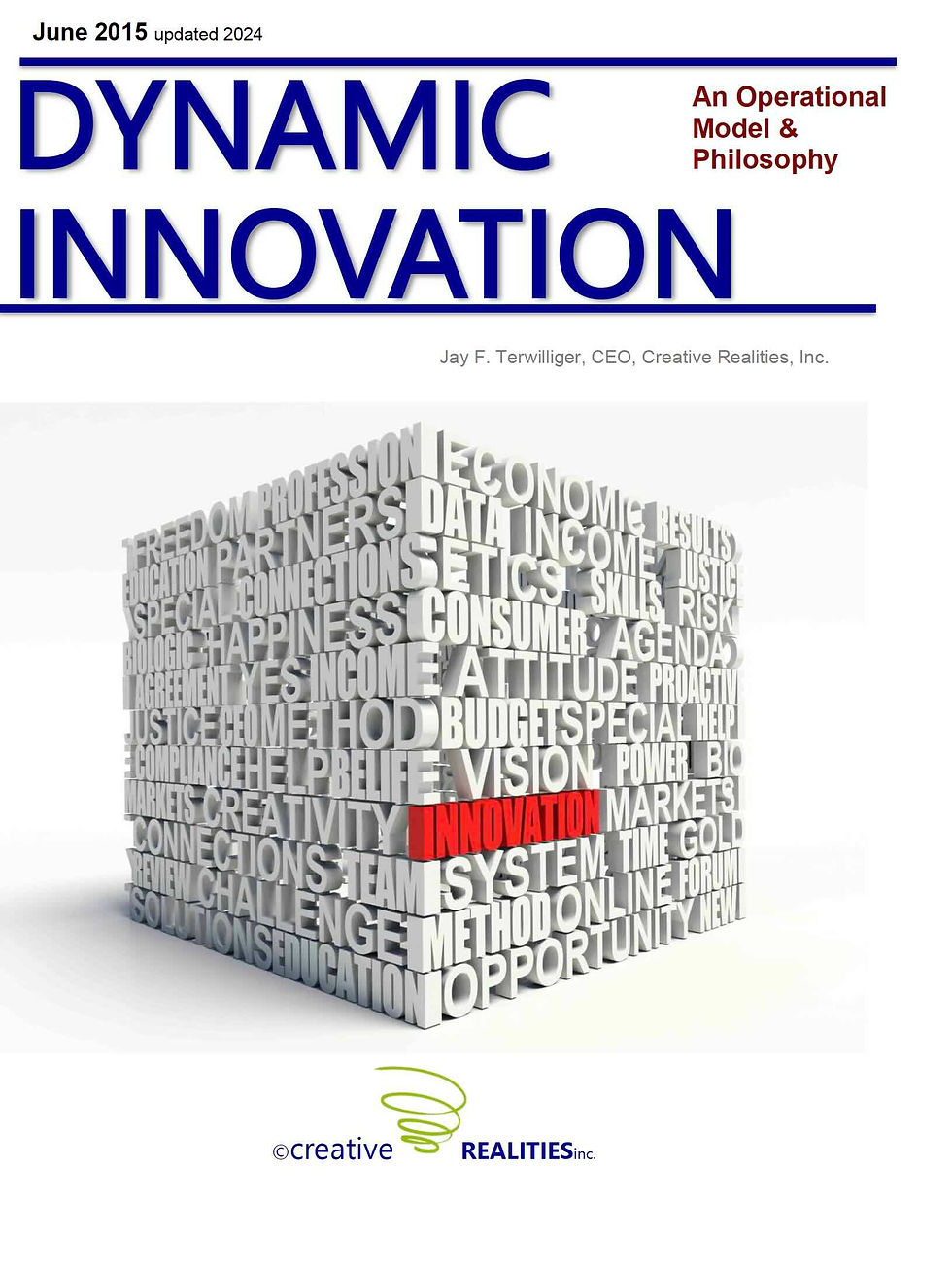
✅ Download more information about Innovation's Critical Success Factors included in our Dynamic Innovation white paper
✅ Review the full blog series
Each post is a standalone resource to improve your innovation practices.
✅ Reach out
If you’d like help assessing, designing, or implementing an innovation strategy—we’re here to collaborate.


Comments